
In the week since the Bahrain Grand Prix, everyone has floated their own theory as to why the race was such a dull and dreary affair. The track, deservedly, gets much of the blame. The new refuelling ban and its effect on race strategy takes some of the blame, as well. However, as has been the focus for the last few years, the aerodynamics of the cars is at the centre of the firestorm. Not surprisingly, the advanced aero packages on the cars are being blamed for the lack of quality racing. However, there is already a solution being floated for another open-wheel series that should give F1 an idea of a way forward.
Formula One cars are designed for ideal conditions. They’re designed to go as fast as possible when they’re out front of the pack with no one nearby in “clean air.” Clean air gives cars maximum downforce on the front wing which allows the car to handle optimally. The clean air also allows air to reach then engine to cool it.
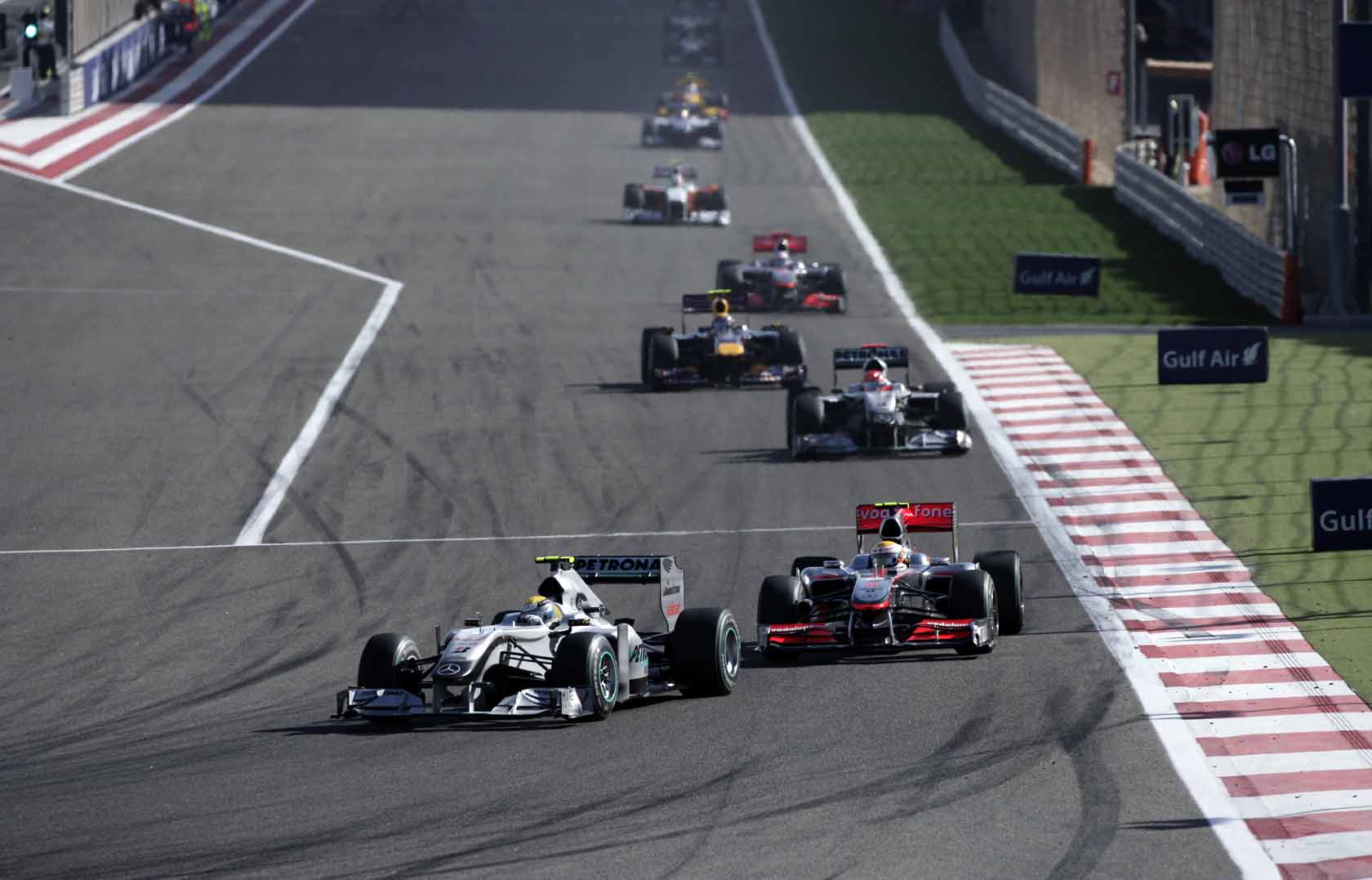 When a car is behind another car, there is no clean air for the trailing car. The air coming off the lead car’s rear wing is disturbed (or turbulent). That turbulent air doesn’t hit the front wing which diminishes the handling capability of the car. That is why F1 has adjustable front wings which allow drivers to attempt to recover the lost downforce. However, the increase in handling from the adjustable wing means that drivers can’t take advantage of the reduced drag (and therefore increased straight-line speed) of less air hitting the front wing. That increased straight-line speed is what commentators refer to as the slipstream (or what North American broadcasters call being in the draft). The other problem with being a trail car is that not as much air gets to the air inlets which means that the engine isn’t being cooled. The trail car will have to fall out of line or drop back to get more air to the radiators so the engine doesn’t blow up.
One of the ideas floated by former Toyota designer Frank Dernie was to use “rock-hard tires” to make braking zones longer to provide more overtaking opportunities. There are two counter-arguments to this. One: NASCAR tried something like this to improve the racing. However, the cars were sliding all over the place and couldn’t get a run on each other. On a road course, like the tracks on the F1 calendar, there might be some merit to this proposition unlike on an oval. That leads to counter-argument number two: The previous ban on in-race tire changes didn’t drastically improve overtaking. Also, the Bahrain GP seemed to have rock-hard tires that were losing grip by the end of the race. That would make me think that going to low-grip tires might make a small difference but isn’t the drastic overhaul that F1 needs to improve the show.
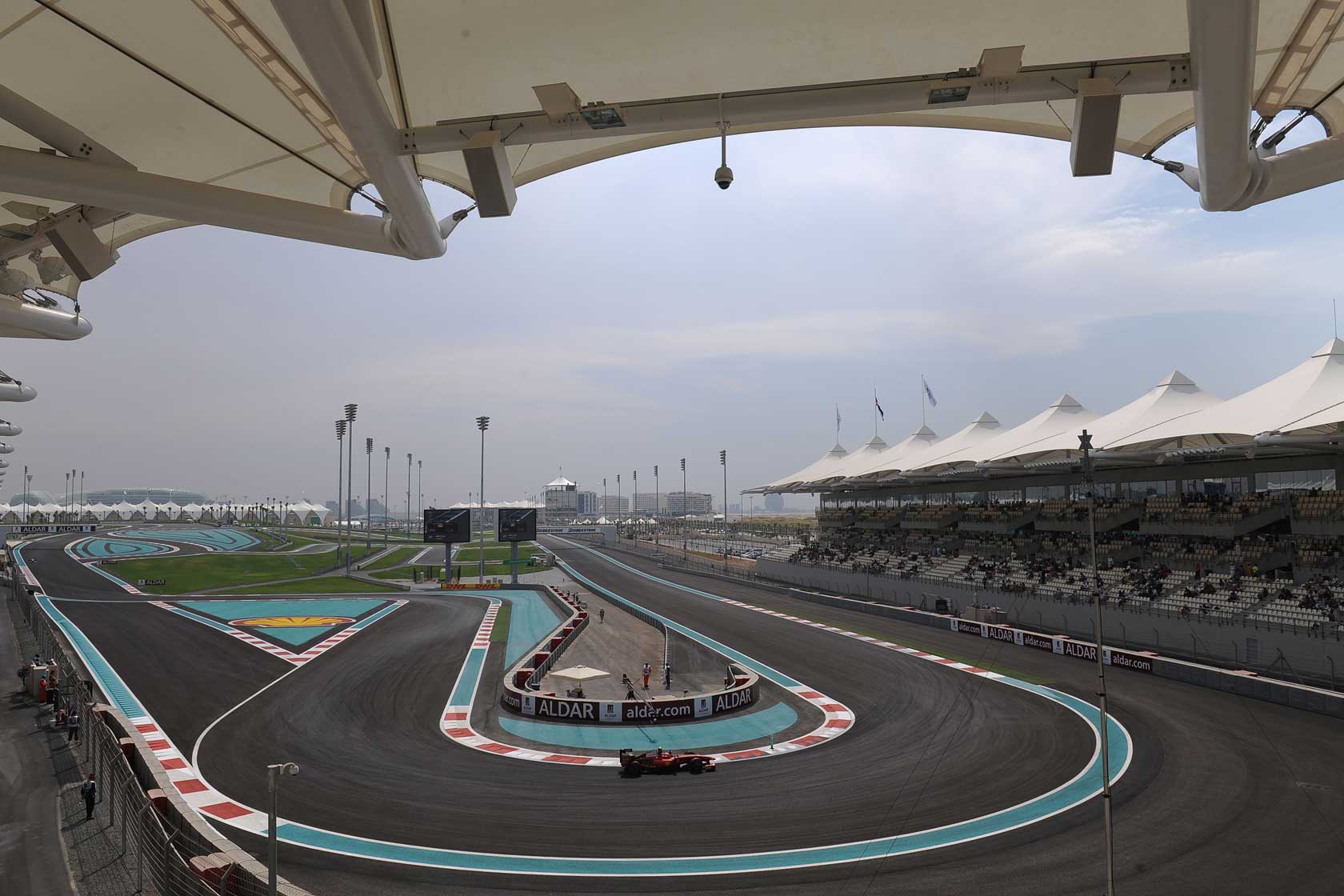 There are two solutions that F1 could attempt to improve racing. Both will cost untold sums of money but one is easier than the other. The first solution involves fixing the circuits. The Tilke-ization of Formula One (a situation which I’ve complained about in the pass) means that near half of the circuits on the calendar follow the same basic formula. There are one or two long straights followed by a slow corner. Those are good for passing but the plethora of medium speed corners and rhythm sections on those tracks make getting close enough to take advantage of those passing opportunities difficult. It gets back to the explanation above. Those medium speed turns are where downforce becomes increasingly important. Without full front downforce, closing in on a slow car is exceedingly difficult because front downforce is diminished so the trailing car can’t take full advantage of the slipstream down the straight-away. Another Tilke trademark is the slow turn followed immediately by another bend like Turns 1 and 2 at Bahrain. A driver could get up the inside at turn 1 but find themselves on the outside of turn 2 and not finishing the pass.
Another problem with Tilke circuits are that they almost entirely flat. Elevation changes into, through, and on the exit of turns change the attitude of the car. Generally, uphill turns make the car understeer and downhill turns create oversteer. Camber (or banking) in turns also affect the handling. A driver’s ability to cope with those is part of the skill set he should be using on a regular basis. I think there might be only one downhill breaking zone at Bahrain and no turns with an incline. Of all the Tilke tracks (Bahrain, Malaysia, China, Hockenheim, and Abu Dhabi), I can only think of two turns on an incline (a double-right at Malaysia and the T1/2 complex at China). That doesn’t really force skill from the drivers.
Of course, all the blame can’t lie with Hermann Tilke (as much as proper F1 fans would like to blame him for all that ails the sport). As mentioned above, the pursuit of more speed means the pursuit of increasing downforce. Increasing the downforce means more advanced aerodynamic devices which means that there’s more turbulent air coming off the back of a car which makes it more difficult to follow a car in front. The FIA’s brilliant idea was to make the front wings bigger and rear wings smaller. Unfortunately, that hasn’t had the desired effect. Raising the rear wing has likely increased the distance behind the car that turbulent air flows which means the bigger front wing doesn’t make much of a difference. The fact that the FIA insisted that there were fewer elements to the front wing means that it’s probably not producing much more downforce than the last generation of F1 car.
My solution to the aerodynamic problems with current F1 cars brings us to this side of the pond. American open-wheel racing was looking to differentiate itself by improving the quality of racing. In its last days, Champ Car introduced a new car which was slightly narrower than the cars under the last set of rules (to give drivers more room) but also lowered costs and made the car less disturbed in turbulent air. While there is nothing to say that the cost factor would translate to F1, the other two could be applied to F1. The most important part of the last Champ Car was the fact that over half of its downforce was generated by the car’s underbody. While I’ve said that more downforce means more turbulent air, with underbody produced downforce, it works best if the air coming out from under the car is clean. The air travelling under the car is accelerated to reduce the air pressure under the car which causes the air traveling over the air to push it into the ground because it has higher air pressure. That accelerated air needs to be reintroduced to the normal flow of air with a rear diffuser and the cleaner the air leaves the diffuser, the more downforce is produced. Therefore, the effect on the downforce of a trailing car is minimal compared with a lead car that uses wings to generate most of its downforce.
With that in mind, what would be the best way to ensure that an F1 car produces most of its downforce from the underbody? Well, letting the cars be flat-bottomed (with the exception of the 10 mm FIA legality plank) would be a good start. That doesn’t mean that cars will trim out the wings to reduce the turbulent air off them. That brings us back to how to reduce the turbulent air off the wings. The easiest way would be to say that no wings would be allowed. No wings, no barge boards, and no other little flaps designed to generate downforce on the body of the car. For anybody that’s never seen a pre-1970s F1 car, the idea of an F1 car without wings is ludicrous. However, the idea of an open-wheel car without any wings isn’t totally far-fetched in this day and age.
 Back to this side of the pond. The IndyCar Series is looking at a new car to debut in its 2012 season. One of the many concepts put forward is a very controversial and very radical one called the Delta Wing. The basic idea behind the car is half the weight, half the drag, half the power, half the cost but go the same speed. The look of the car is likely to disturb the so-called F1-purists. It’s been described as a top fuel dragster meets Speed Racer. But my thinking is that racing has to evolve. If somebody at Cooper didn’t put the engine behind the driver, we’d still be watching front-engined boats. If Colin Chapman didn’t come up with the monocoque chassis, we’d have cars that would be wallowing around because there wouldn’t be any structural rigidity. If somebody didn’t put an upside-down airplane wing-like appendage on a car, the cars would slip and slide all over the track. If McLaren didn’t build a car completely from carbon fibre… Things would be a lot cheaper but the cars wouldn’t be as safe and likely would be slower. The Delta Wing may seem like a revolution but I think it’s just a very large step in the evolution of race car design.
It’s not the actual car itself that F1 should be carbon copying for its next set of rules. Like I said in the last paragraph, it’s the concept behind the Delta Wing that gives it potential. Why not have a turbocharged four-cylinder as an engine? It would use less fuel so you could give teams the option of refuelling or not because they could carry enough fuel to last a whole race distance without it being so much that they can’t stay in contention. Covering the wheels is an idea that even Michael Schumacher supports. It doesn’t have to be done like the Delta Wing. There could be a wider front-track and tires and nothing says that the front tires have to be completely inside the width of the front nose section. The driver sits upright so it’s safer for him and a potential injury like the Schumacher or Glock broken legs could be avoided.
Most importantly, the Delta Wing, in concept, looks like it is built to run well in traffic and out front. There’s a small spoiler at the very back of the car (which is often called a wicker strip in AOWR parlance). That creates downforce on the top of the car but it also provides a slipstream opportunity. As I mentioned before, the cleaner the air coming out from the diffuser, the more downforce it produces. That would mean that the cars should be able to follow closely which would mean better racing. Of course, this is all in theory. The Delta Wing hasn’t been on track yet and all the optimism over its ability to improve racing has been based on computer simulations of airflow and on-track performance. Nothing says that this thing will work as advertised. But when you think about it, neither have any of the ideas that have come out of F1 recently.
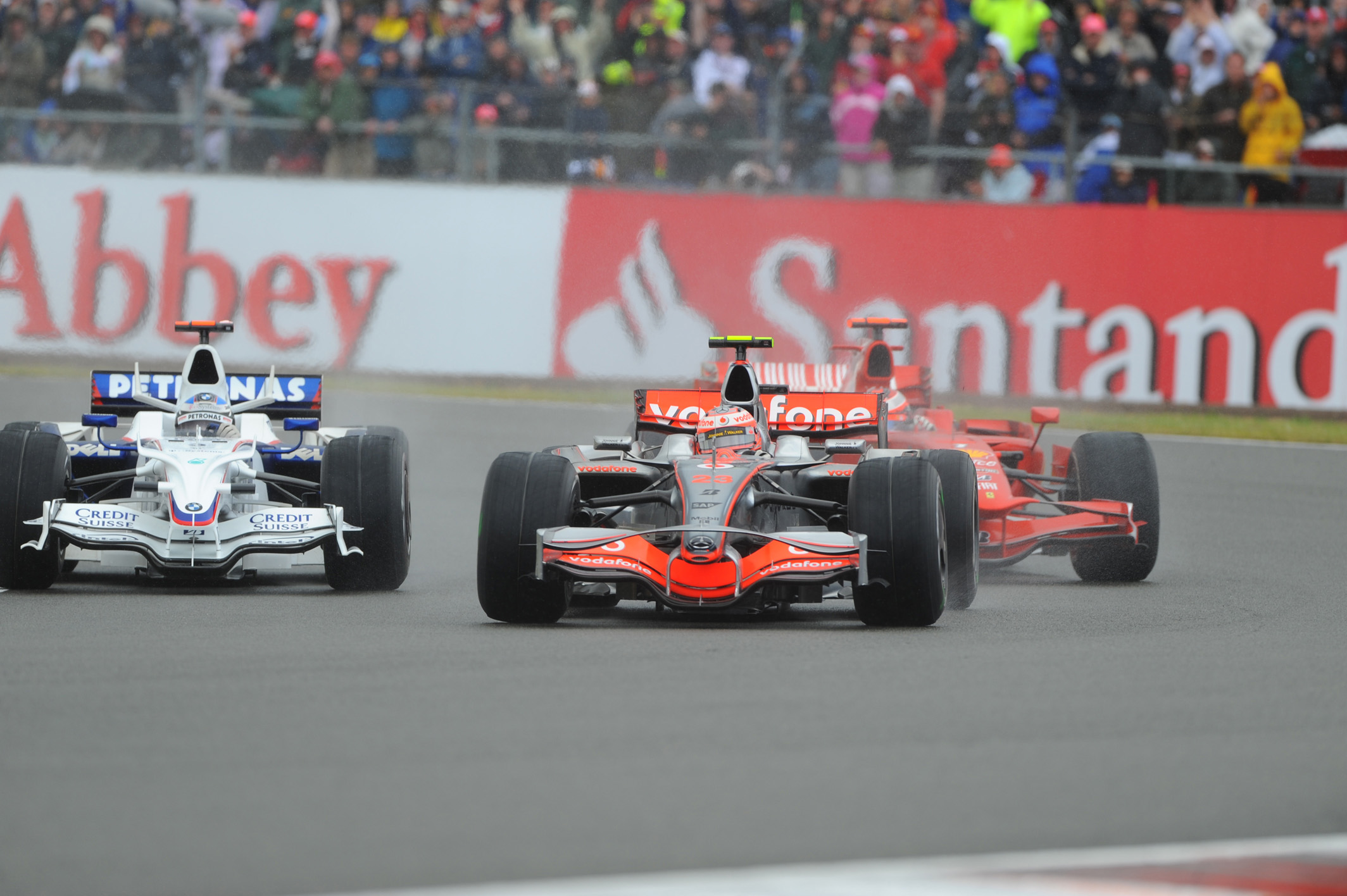 Of course, I will admit that it’s too soon to tell if F1 needs a complete overhaul to improve the racing. I thought that the racing was finally starting to get good in 2008. Hell, it really seemed as though anyone could win. The cars had been developed to the point where the playing field was starting to level out and the mid-field runners could run up near the front. If this generation of car is allowed to run its course, we might see the likes of Sauber, Force India, and Williams on the top step of the podium. Formula One seems to like to be proactive to its own detriment. The 1997 season was also pretty even and it took nearly 11 years to get back to the point where an effort like Toro Rosso (kinda like Arrows) could pull off an upset.
Maybe, just maybe, if the cars are changed so it’s easier to follow and pass, that could make talent the number one decider of who finishes where and not who has the deepest pockets to fund aerodynamic development.
 The Lowdown
One thought on “Formula One: Solving the Absense of Racing”